
As malaria cases are increasing amidst global funding uncertainty, ITNs should be optimally deployed to reach all people in need. Strengthening ITN distribution is essential for improving and sustaining ITN access.
Programme experience has demonstrated that increasing and sustaining ITN access will decrease malaria incidence. According to the 2025 WHO World Malaria Report, in 2024, 68 per cent of households in sub-Saharan Africa had access to at least one ITN. This represents an increase from five per cent in 2000, but also a return to the level observed in 2015. Malaria funding has faced sharp reductions since 2025, while ITN commodity costs have increased to address pyrethroid resistance, and variable ITN durability affects ITN retention.
To support national malaria programmes (NMPs) and partners in increasing and sustaining ITN access, AMP has developed key operational guidance and toolkits.
To achieve maximum impact in vector control and reduce malaria transmission, WHO’s Guiding principles for prioritizing malaria interventions in resource-constrained country contexts advise that vector control strategies include the most effective interventions at an optimal scale and frequency.
National malaria programmes are thus encouraged to align with WHO Guidelines for malaria as well as malaria donor recommendations, review operational and financial data, and consider the best mix of distribution channels to maintain ITN access in their settings, noting that appropriate distribution channels will likely include sub-national tailoring.
The WHO Guidelines for malaria and malaria donors recommend consideration of ITN continuous distribution. For more information, consult:
KEY GUIDANCE
These guidance resources support national malaria programmes and partners in designing and refining ITN distribution strategies. Building on evidence and country experience, the guidance documents provide a framework to assess channel capacity, identify operational strengths and limitations, and design distribution strategies that maintain equitable and sustained ITN access.

ITN channel selection
With the objective of optimal distribution of ITNs to populations who need them, guidance and a tool have been developed to assess and determine the optimal ITN distribution channel mix.

ITN quantification
The ITN quantification site presents the number of ITNs required to achieve and maintain targeted levels of ITN access with different combinations of distribution channels and estimates of ITN longevity.

ITN allocation strategies
A key decision in mass campaign planning is the choice of ITN allocation strategy. This website quantifies ITN need and estimates ITN access at national and subnational levels for different allocation strategies.

ITN considerations for optimizing resources
Providing guidance across eight key operational areas, this toolkit helps national malaria programmes navigate funding and resource constraints to continue to deliver cost-effective, high-quality ITN campaigns.
AMP TOOLKITS
Once an ITN distribution channel has been selected, NMPs and implementing partners can draw on AMP toolkits.
The AMP Toolkits provide operational guidance for implementation of distribution through different channels, i.e mass campaign and continuous. Continuous includes three modes: distribution through routine health services, through schools and through community structures. Each channel has distinct operational requirements and considerations, and may be used alone or in combination to achieve and sustain ITN access.
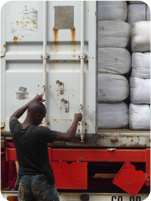
Mass campaign distribution
Operational guidance for improving the planning and implementation of ITN distribution delivered via routine health services.
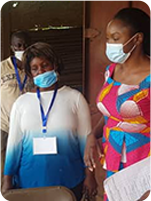
Distribution through routine health services
Operational guidance to support the planning and implementation of ITN distribution through routine health services.

School-based distribution
Operational guidance to support the planning and implementation of school-based ITN distribution, supported by a suite of adaptable tools and country resources.
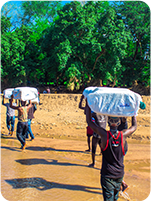
Community-based distribution
In progress